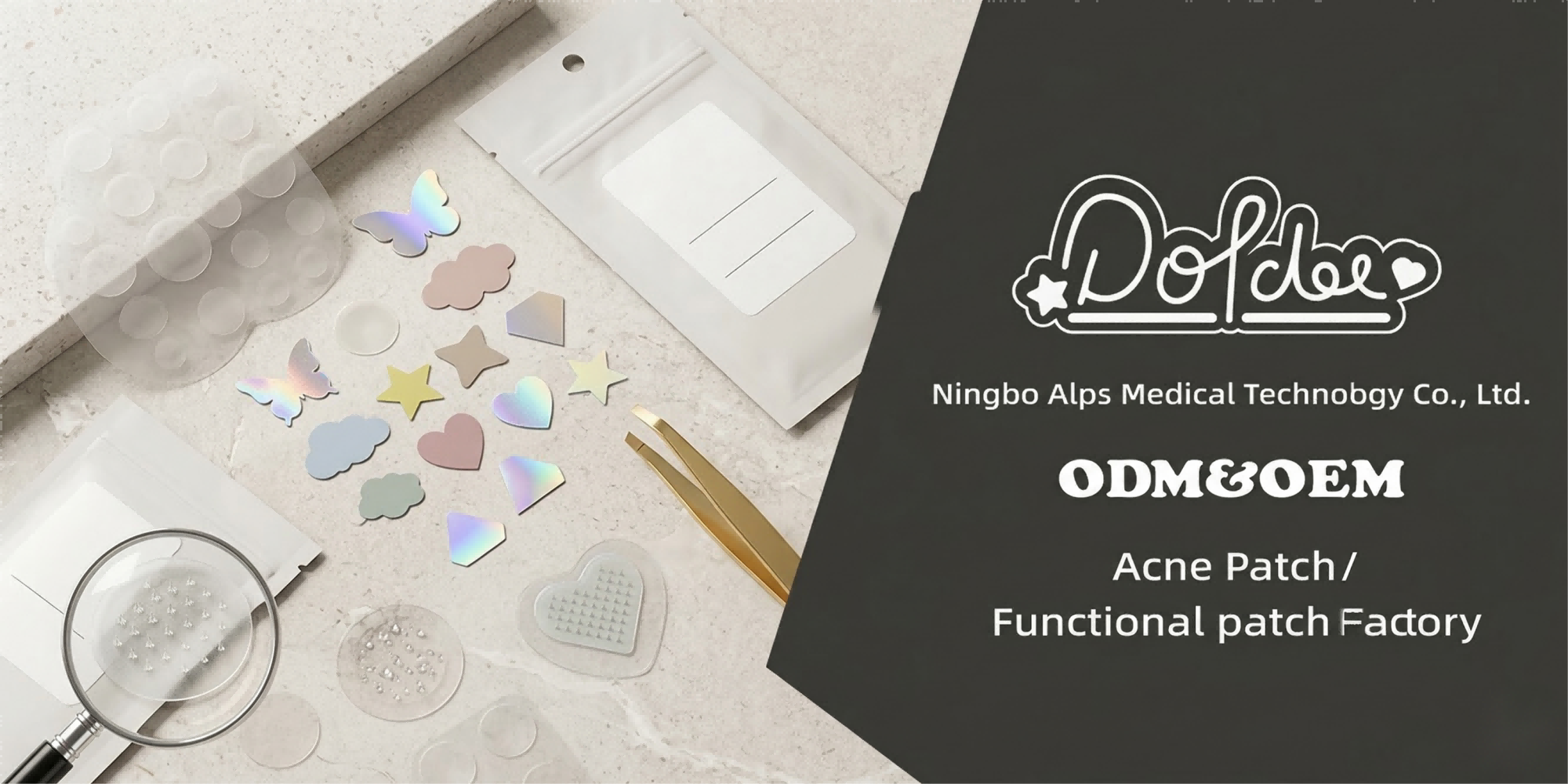
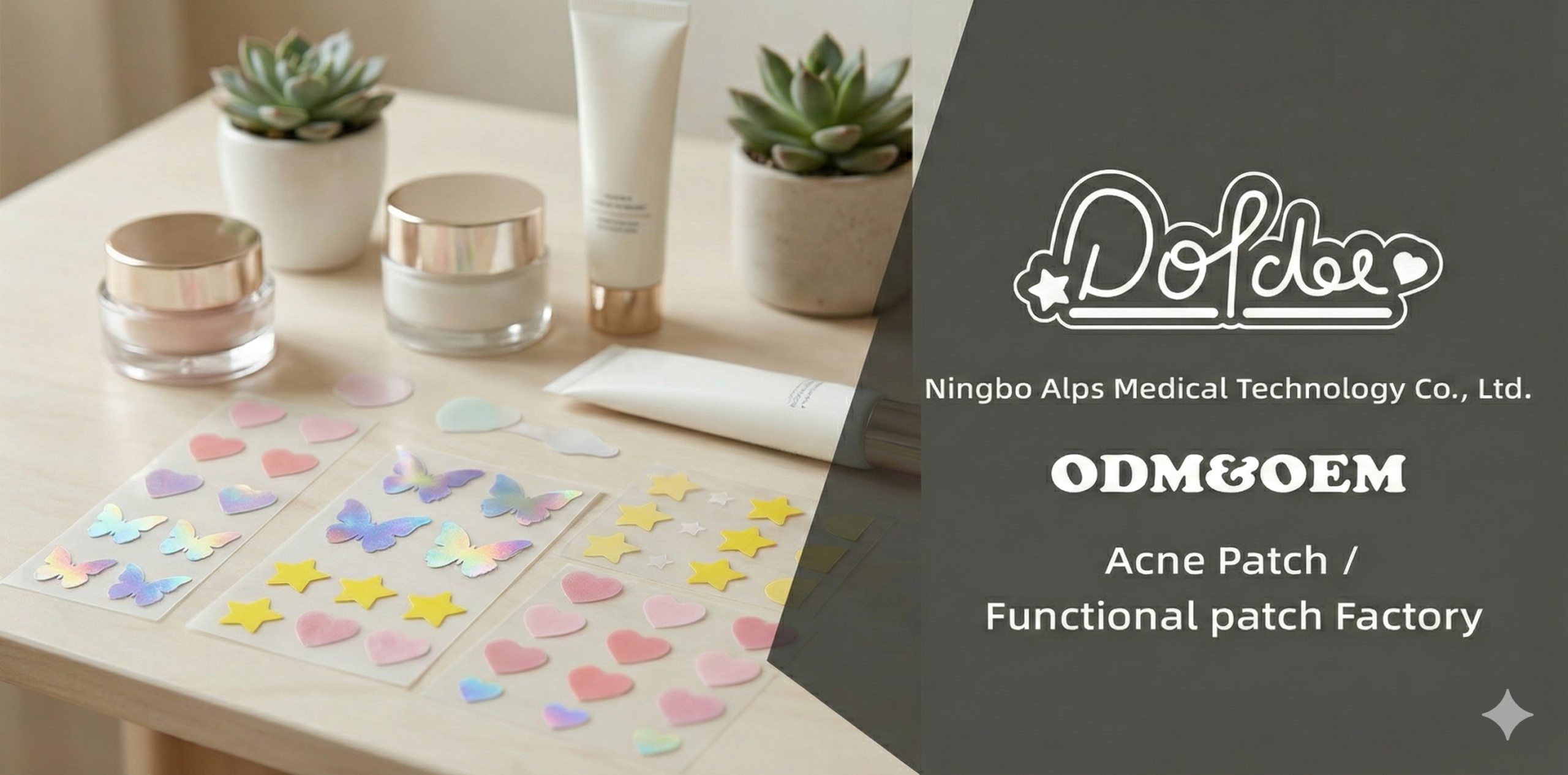
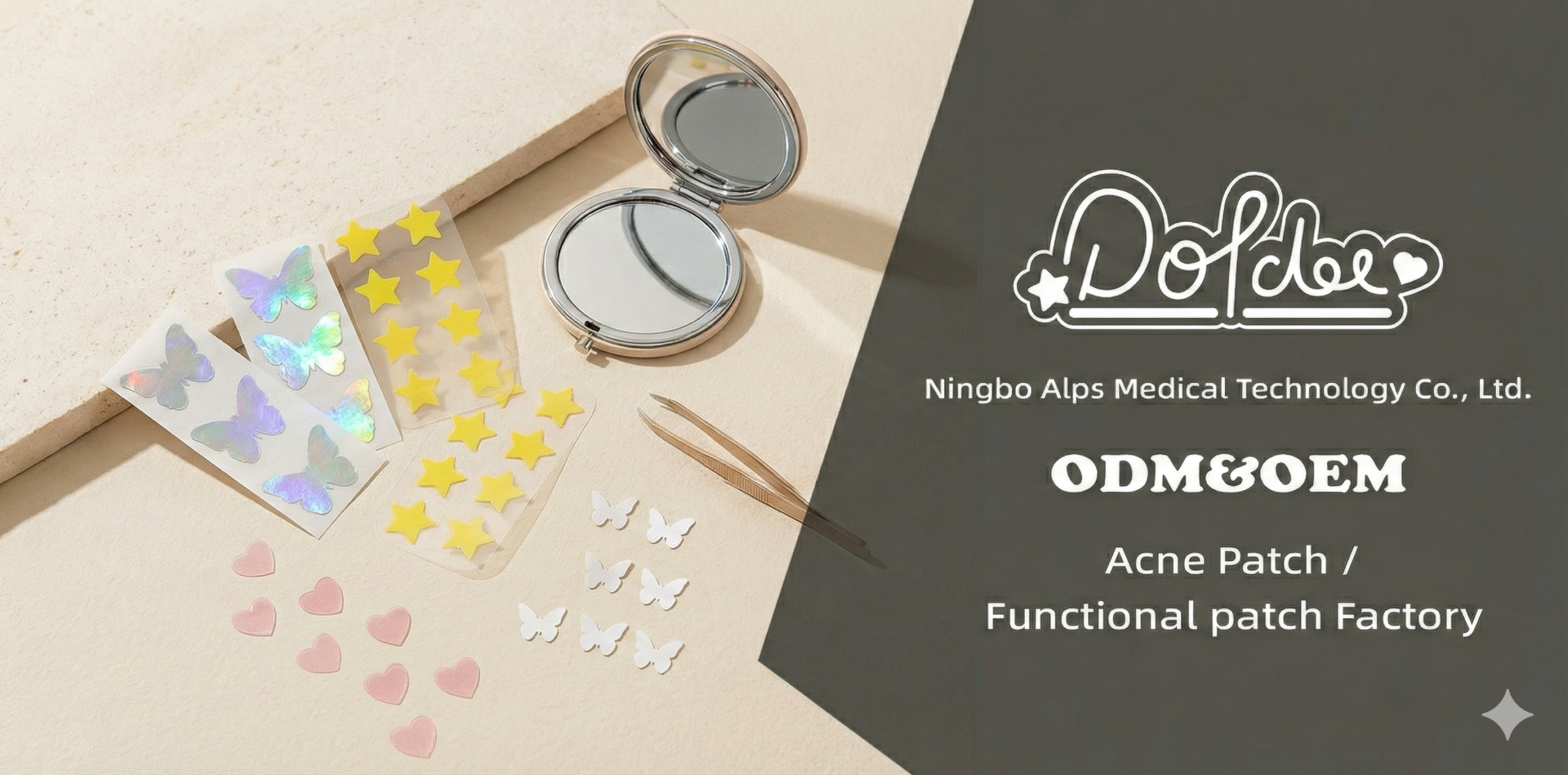
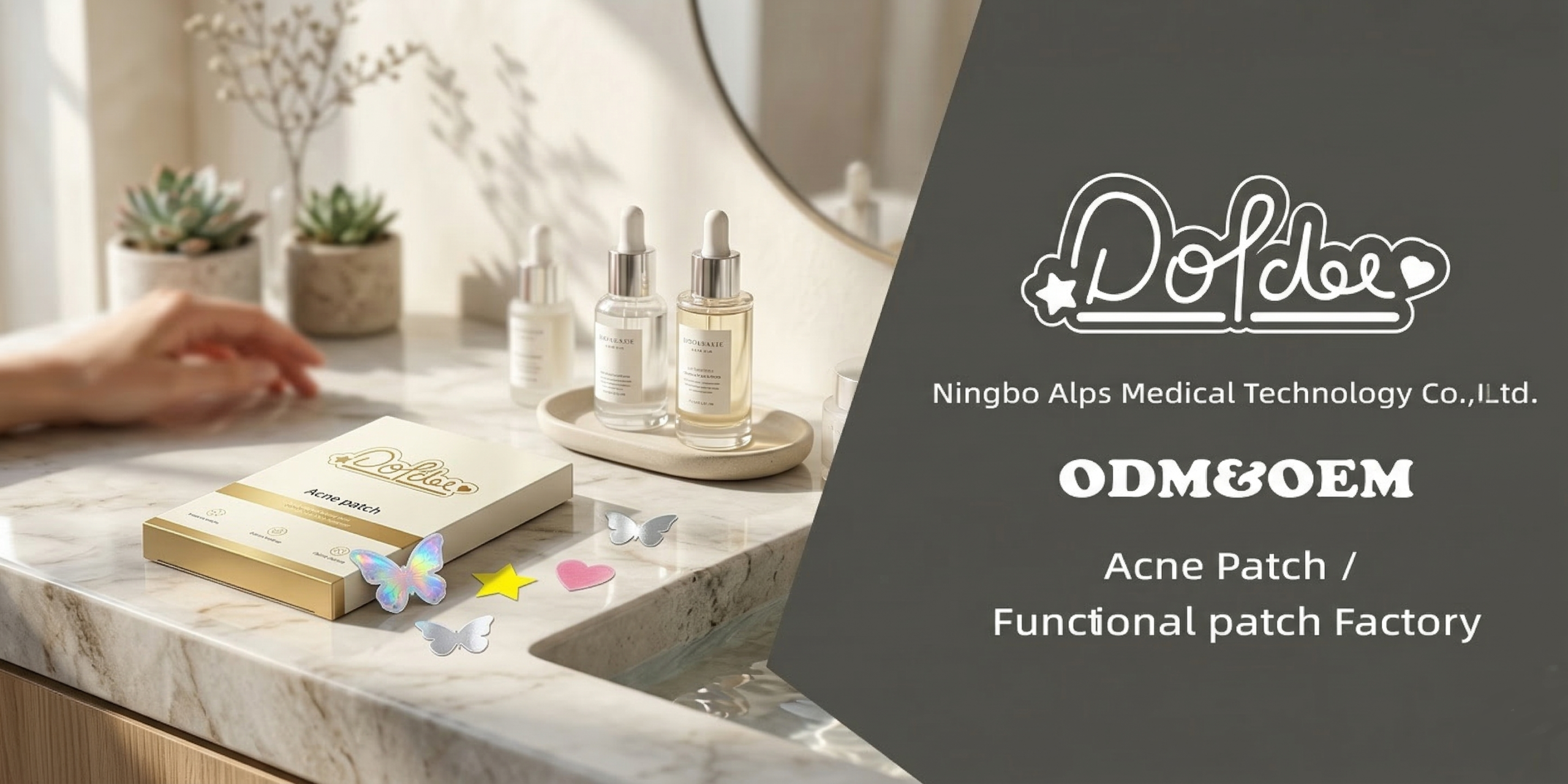
_画板-111.png)
Custom Printed and Colored Acne Patches: A Brand Differentiation Guide for Private Label Buyers
_画板-1-1-300x300.png)
Alps Medical
15 Years of Acne Patch Factory Manufacturing and Wholesale
Table of Contents
Private label acne patch brands face a familiar challenge: the base hydrocolloid formula is often similar across suppliers, which means the product itself does not always create immediate visual or emotional distinction on a retail shelf or Amazon search results page. Buyers who are evaluating custom acne patch development frequently ask how far they can push aesthetic differentiation without overcomplicating production, inflating MOQ, or introducing compliance risks that are harder to manage at launch.
This article walks through the practical differences between stock-shaped, colored, and custom-printed acne patches for private label projects. It is written for brand founders, Amazon sellers, and beauty buyers who are comparing options before committing to a product development path.
Why Visual Differentiation Matters in the Acne Patch Category
As of 2026, the acne patch category on Amazon and social-commerce platforms remains highly competitive. Top-selling products from brands such as COSRX, Hero Cosmetics (Mighty Patch), and Rael have built strong recognition around formula and packaging consistency. For a new private label entrant, competing purely on functional claims is difficult without established review history or brand equity.
Manufacturers and market analysts who track beauty category trends have noted that colorful, shaped, and visually distinctive hydrocolloid patches continue to gain traction on TikTok and Instagram, where the product itself becomes a shareable moment rather than a hidden skincare step. This is especially true for brands targeting Gen Z consumers (roughly ages 16 to 24), who have helped normalize visible patch wearing as part of self-care and skin-positivity positioning.
For brands targeting clinical, pharmacy, or premium minimalist channels, a different visual language applies: clean layouts, restrained color palettes, and subtle branding that communicates ingredient quality rather than playful aesthetics. The visual differentiation strategy must align with the target channel and consumer profile before any production decisions are made.
Stock Shapes vs Custom Shapes and Printed Designs
Before comparing customization options, it helps to understand what manufacturers typically offer as starting points.
Standard Stock Patch Options
Most acne patch manufacturers offer a range of stock shapes, typically including:
- Round patches in multiple diameters (commonly 8mm, 10mm, 12mm, and 14mm)
- Standard oval or teardrop shapes
- Star-shaped and heart-shaped patches in a limited number of sizes
- Clear transparent hydrocolloid patches
- White or light-tinted hydrocolloid patches that turn opaque when absorbing fluid
Stock shapes allow a buyer to move directly to custom packaging and branding without altering the patch itself. This path typically has the lowest barrier to entry for a first launch, with MOQ and lead time driven primarily by packaging and labeling decisions rather than patch tooling.
Custom Shapes and Printed Designs
Custom shape customization goes beyond choosing from a manufacturer’s existing die-cut options. Buyers who want a proprietary patch silhouette, a brand-specific icon, or a shape that performs better for certain blemish areas can work with a manufacturer to open a new die-cutting mold. This process involves:
- Creating or commissioning artwork for the desired shape
- Working with the manufacturer to develop a production-ready knife-line drawing
- Setting up and testing the custom mold before bulk production
- Accounting for shape complexity, sheet layout efficiency, and material waste in the costing
Printed designs add another layer of differentiation. Some manufacturers offer surface printing with skin-safe inks, allowing brands to add logos, patterns, motivational text, or decorative graphics directly onto the patch surface. This is different from colored hydrocolloid (where the material itself is tinted) and is closer to brand packaging applied to the product.
Colored hydrocolloid patches use pigment added to the hydrocolloid formulation to produce tinted patches in a range of hues. The color depth and consistency depend on the manufacturer’s formulation and production capabilities. Not all manufacturers offer colored hydrocolloid, and color matching across batches requires clear specification and sample approval before bulk orders.
Stock vs Custom Shape and Printed Patch Comparison
The table below summarizes the key practical differences between stock and custom patch options. Specific numbers for MOQ, lead time, and cost vary by manufacturer, patch type, packaging, and order quantity. Verify all figures with your supplier.
| Factor | Stock Shapes (Round, Oval, Star, Heart) | Custom Printed Shape or Design |
|---|---|---|
| Patch shape options | Limited to manufacturer die-cut library | Fully custom based on buyer artwork and mold development |
| Color customization | Standard clear or light-tinted hydrocolloid; sometimes one or two stock color options | Color matching, gradient rainbow, multi-color printing on patch surface |
| Artwork and design files required | Minimal; branding applied to packaging only | Production-ready artwork for patch surface; may require brand-specific mold setup |
| MOQ impact | Lower starting MOQ; driven by packaging and count-per-pack | Custom shapes and printed designs typically increase MOQ due to mold setup and production alignment |
| Lead time impact | Shortest path; faster sampling and production | Additional time for mold development, artwork approval, sample rounds, and color matching |
| Unit cost impact | Lower unit cost at scale with stock tooling | Higher tooling or setup amortization; cost per unit depends on order volume and design complexity |
| Brand differentiation potential | Moderate; branding limited to packaging and label | High; patch itself carries brand identity and visual appeal |
| Best-fit channel | Amazon bulk listings, pharmacy, clinical, value positioning | Gen Z and youth brands, social-commerce, gift sets, premium retail, DTC boutique lines |
| Risk at first launch | Lower; formula and patch performance are proven | Higher; sample approval, color consistency, and mold quality require careful review |
Key Questions to Ask Before Choosing a Customization Path
Whether to go with stock shapes or custom designs depends on factors that extend beyond personal preference. Before committing to a custom shape or printed patch, buyers should clarify the following with their manufacturer or prospective supplier.
Target Consumer and Channel
Is the brand targeting Gen Z consumers who respond to colorful, expressive, and shareable patch designs? Or is it aiming for a clinical or minimalist audience where a clean, transparent patch is more appropriate? The channel strategy should drive the visual direction, not the other way around.
Volume and Reorder Expectations
Custom shape patches that perform well on social media can generate reorder demand quickly, but only if the brand has inventory ready to fulfill. A custom shape mold represents a fixed setup cost; the per-unit economics improve at higher volumes. Buyers who anticipate small or irregular reorders may find that custom shapes are harder to support long-term without carrying excess inventory or facing per-order price premiums.
Packaging Consistency
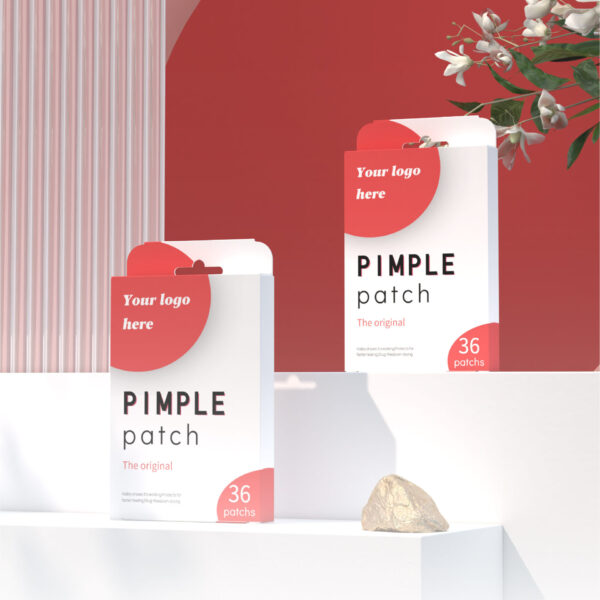
Custom patch aesthetics and custom packaging design should be developed together. A distinctive patch shape loses impact if the retail box or pouch does not reinforce the same visual language. Some manufacturers offer design support for both patch and packaging, which can reduce communication gaps between the two production streams.
Supplier Capability and Track Record
Not all manufacturers offering private label services have the same level of experience with custom shapes, colored hydrocolloid, or patch surface printing. Ask prospective suppliers for:
- Samples of previous custom shape or printed patch orders
- Color matching process and tolerances
- Quality control steps for printed or colored patches
- Documentation of skin-safe ink compliance for printed patches
- MOQ and lead time for the specific customization level you are considering
Market-Specific Label and Claim Requirements
For the United States market, standard hydrocolloid patches without drug claims are generally positioned as cosmetics under current FDA rules. Colored or printed patches that make appearance claims (such as helping cover or protect blemishes) typically fall within the same category, but any wording that implies treatment, cure, or biological effect should be reviewed carefully.
Under MoCRA (Modernization of Cosmetics Regulation Act of 2022), cosmetic product listing and facility registration are required for US market distribution, with certain exemptions for small businesses. Brands should confirm with their supplier whether the manufacturer can support applicable registration, product listing, labeling review, and documentation requirements for the target market and sales channel.
The cosmetic vs. drug classification boundary depends on product composition, intended use, and claims. Plain hydrocolloid patches positioned for fluid absorption and spot coverage are generally cosmetics, while patches making therapeutic claims or containing certain active ingredients may require different regulatory treatment. Requirements should be verified for the target market and channel before finalizing label copy.
Planning a First Order: Stock vs. Custom
For brand founders and Amazon sellers launching a first private label acne patch SKU, the choice between stock shapes and custom designs often comes down to launch speed, budget, and channel strategy.
When Stock Shapes Are the Practical Choice
Stock shapes are generally the right starting point when:
- The brand is entering the category for the first time and needs to validate consumer response before investing in custom tooling
- The target channel (Amazon bulk, pharmacy, clinical) values function and value over visual novelty
- MOQ, lead time, and budget constraints make custom shape development less practical at launch
- The brand has limited packaging or design resources to develop coordinated patch and retail packaging
When Custom Shapes or Printed Designs Are Worth the Investment
Custom patch customization becomes more compelling when:
- The brand targets a consumer segment that responds strongly to visual aesthetics and self-expression
- The product is positioned as a gift item, seasonal release, or limited-edition SKU
- Social media shareability is a core part of the launch and growth strategy
- The brand has established packaging and design assets that can be extended to the patch itself
- Reorder volume and frequency are expected to justify the tooling investment over time
How a Manufacturer Can Support Custom Patch Development
Buyers who decide to pursue custom shapes or printed patches should look for suppliers that offer end-to-end support from concept through production. This typically includes:
- Artwork and design review for patch surface printing and custom shape specifications
- Knife-line drawing preparation and mold development for new shapes
- Sample production and approval rounds before bulk orders
- Color matching and batch consistency checks for tinted or printed patches
- Packaging design coordination for retail-ready or Amazon-ready formats
- Documentation and compliance support for the target export market
The specific services available vary by manufacturer. Some suppliers offer low starting MOQ with flexible customization paths, while others require higher volumes before opening custom tooling. Confirming these details during the quote and sampling stage helps avoid surprises during production.
Frequently Asked Questions
Can manufacturers create completely custom patch shapes for private label orders?
Yes. Most manufacturers that offer OEM or ODM services can develop custom die-cut shapes based on buyer artwork. This requires creating a new knife-line drawing and setting up a production mold, which typically adds to lead time and MOQ compared to stock shape orders. Ask the supplier for a sample approval process before committing to bulk production.
What is the typical MOQ for custom-shaped or printed acne patches?
MOQ varies by manufacturer, patch type, packaging format, and customization depth. Stock patches with custom packaging typically start at lower quantities than fully custom shapes with printed surfaces. Ask each supplier for their specific MOQ by patch type and packaging configuration, and confirm whether tooling or setup fees apply.
Are colored hydrocolloid patches safe for all skin types?
Colored hydrocolloid patches use pigment added to the hydrocolloid formulation. Skin-safe coloring agents and material grades should be confirmed with the manufacturer. If the target consumer base includes sensitive skin or specific skin concerns, request ingredient details and, where available, relevant test reports or skin compatibility documentation.
How does custom printing on patch surfaces work, and what inks are used?
Some manufacturers offer surface printing directly onto the patch using skin-safe inks. The ink compatibility, color vibrancy, and durability across batches depend on the production process. Ask the supplier whether their printed patches meet relevant cosmetic safety standards and request a sample to evaluate appearance, adhesion, and skin feel before placing a bulk order.
Do colored or printed patches require different documentation for US market entry?
The regulatory category for hydrocolloid patches generally depends on composition, intended use, and claims rather than color or print. Standard hydrocolloid patches without therapeutic claims are typically positioned as cosmetics. Colored or printed patches that do not make drug claims usually fall within the same cosmetic category, but label copy should be reviewed carefully. Confirm applicable requirements with your supplier and, where needed, with qualified regulatory counsel for the target market.
What is the typical production lead time for custom patch orders?
Lead time depends on artwork approval, sample rounds, packaging complexity, and production scheduling. Stock patches with custom packaging typically have a shorter path to production than orders requiring new mold development or color matching. Request a detailed timeline from the supplier that covers artwork approval, sample production, bulk production, inspection, and shipping.
How can I test patch quality and appearance before placing a bulk order?
Most manufacturers offering private label or OEM services can provide samples for approval. It is advisable to request physical samples of the actual patch (not just images or digital proofs) to evaluate adhesion, thickness, edge finish, color consistency, and packaging appearance. Sample approval should be completed and documented before production begins.
Can I start with stock patches and move to custom shapes in a later reorder?
Yes. Many brands launch with stock patch shapes and custom packaging to validate the market before investing in custom tooling. Transitioning to a custom shape later is possible but may involve new mold setup, additional sampling, and updated documentation. Planning for this progression early can reduce friction during a future product refresh or line extension.
Suggested Internal Links
- Private label acne patch launch guide
- Acne patch packaging options for retail and Amazon
- Understanding hydrocolloid patch material grades
- Adhesive performance and adhesion testing for acne patches
- MoCRA compliance for private label cosmetic brands
Suggested Image Alt Text
- Close-up of custom star-shaped hydrocolloid acne patches on a retail shelf
- Comparison table showing stock round patches versus custom printed heart-shaped patches
- Private label acne patch packaging mockup with custom color scheme
- Custom-shaped hydrocolloid patches arranged on a product photography backdrop
- Manufacturer sample approval sheet showing custom patch shapes and printed designs
Claim Risk Notes
This article uses claim-safe language throughout. Specific points to note:
- Hydrocolloid function is described as helping absorb fluid from surfaced blemishes and helping protect the area, without implying disease treatment.
- Custom printed and colored patches are discussed in terms of visual brand differentiation, not therapeutic or medical benefit.
- Regulatory references for the US market distinguish between cosmetic and drug positioning, emphasizing that the appropriate category depends on product composition, intended use, and claims.
- MoCRA requirements are described as applicable regulatory obligations, with notes that small business exemptions exist and that facility registration is not equivalent to FDA approval.
- No specific MOQ, lead time, cost, production capacity, defect rate, or certification coverage is claimed without user-supplied data or clear framing as variable and requiring verification.
Sources and Evidence Notes
- Market trend observations regarding Gen Z response to colorful and shaped patches are informed by current manufacturer and industry analyst commentary on social-commerce beauty trends, sourced from manufacturer websites and B2B beauty sourcing platforms.
- MoCRA regulatory information is based on official FDA guidance pages for the Modernization of Cosmetics Regulation Act of 2022, including facility registration, product listing, adverse event reporting, and small business exemption criteria.
- Cosmetic vs. drug classification guidance is informed by official FDA regulatory interpretation regarding product intended use, claims, and the cosmetics-OTC drug boundary.
- Specific manufacturer capabilities, pricing, and MOQ ranges are not claimed as universal figures. All commercial parameters are described as variable by supplier, product type, packaging, and customization depth.
- Specific brand examples (COSRX, Hero Cosmetics, Rael) are referenced for market context only and do not imply endorsement or competitive comparison.