_画板-111.png)
Festival Season SKU Strategy: Why ‘Statement Patches’ Will Outperform Invisible Patches
_画板-1-1-300x300.png)
Alps Medical
15 Years of Acne Patch Factory Manufacturing and Wholesale
Table of Contents
Q2 is the battleground for skincare brands. April through June represents the peak of the global festival circuit—from Coachella to Governor’s Ball—and with it, a massive spike in consumer spending on “event-ready” beauty. If your current inventory strategy relies heavily on standard, invisible hydrocolloid patches, you are leaving 40-60% margin potential on the table.
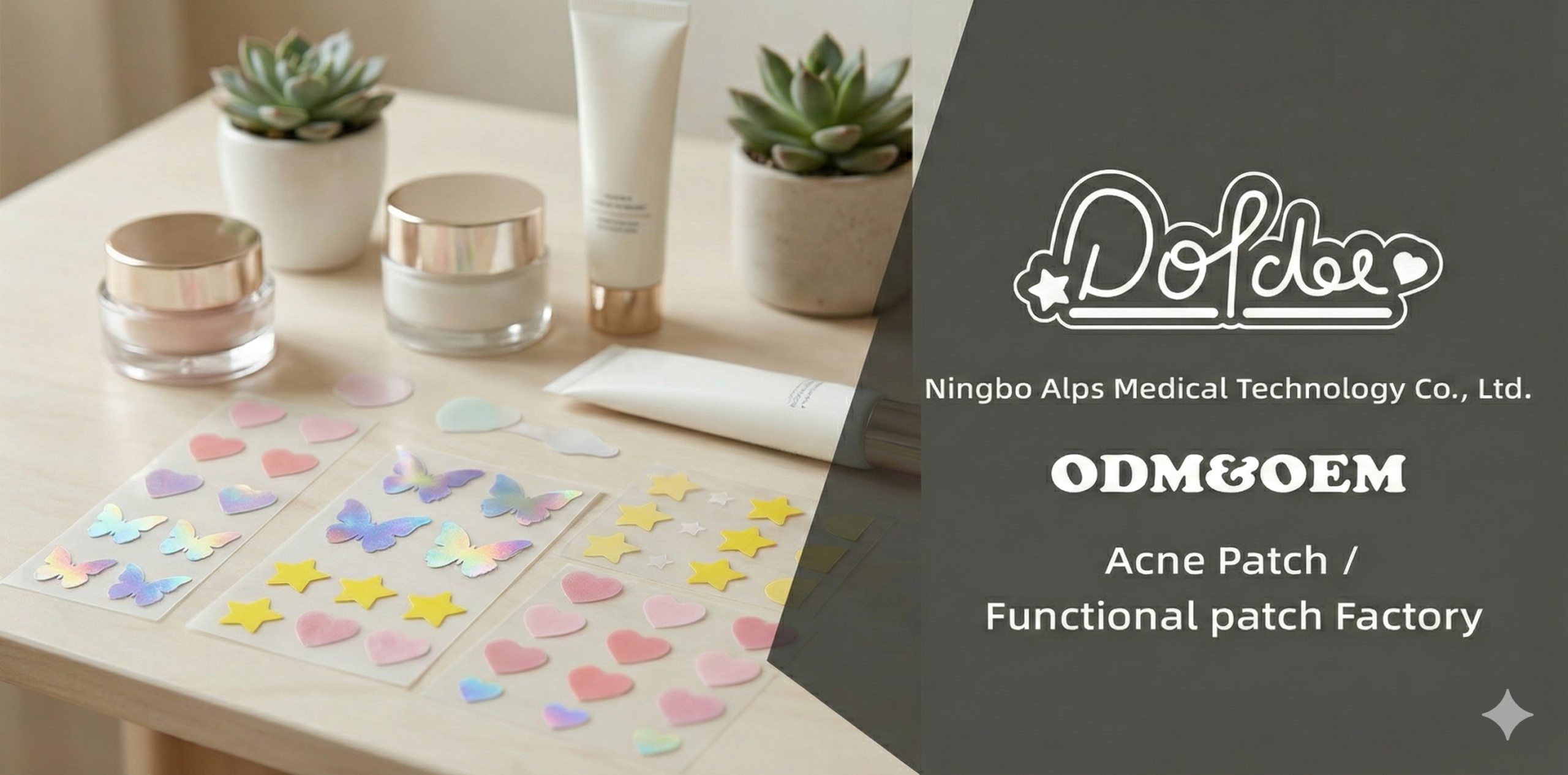
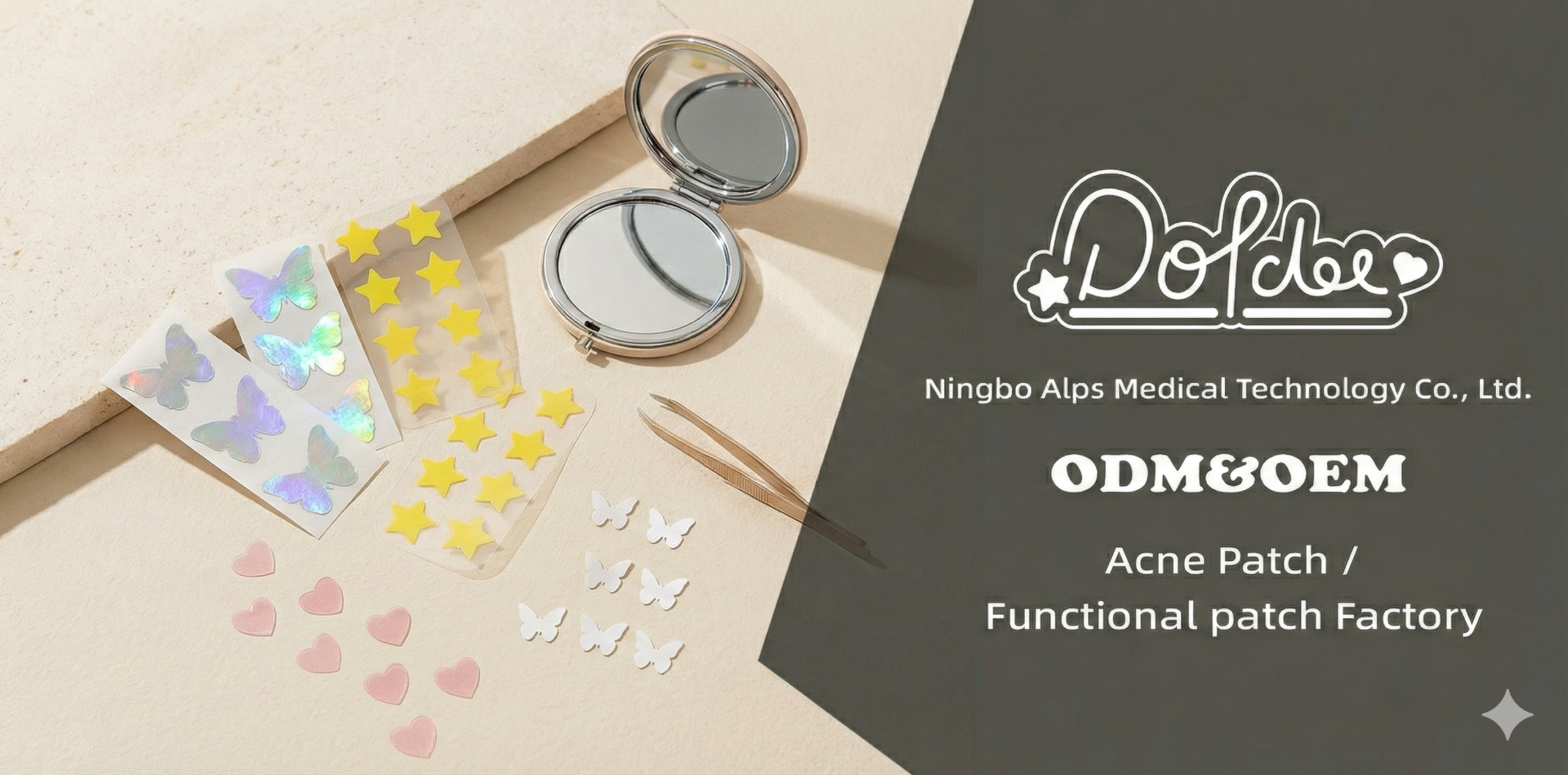
The market has shifted. The old logic was “hide the pimple.” The new logic, driven by Gen Z and Alpha consumers, is “accessorize the pimple.” Invisible patches have become a commodity, subject to fierce price wars on Amazon and retail shelves. To capture the “Dopamine Beauty” market in 2026, you need Statement Patches—designed shapes, colors, and textures that turn a blemish treatment into a fashion accessory.
1. Market Opportunity: The Shift from Concealment to Celebration
Why are brands pivoting to statement patches? Because the “Skin Positivity” movement has fundamentally changed the product use case.
Three years ago, a consumer bought a patch to hide a breakout before a job interview. Today, the festival-goer buys a patch to complete a look. This behavioral shift creates a massive opportunity for procurement managers who know where to look:
- Higher Perceived Value: A consumer will pay $1.50 – $2.00 per unit for a “limited edition” metallic or star-shaped patch, whereas invisible patches are often raced to the bottom at $0.20 – $0.50 per unit.
- Viral UGC Potential: Clear patches are invisible on camera. Statement patches are “Instagrammable,” driving organic reach that paid ads simply cannot buy.
- The Commoditization Trap: If you are sourcing standard circular patches, you are competing with every other brand on the shelf. Custom aesthetics break the comparison trap.
However, many brands hesitate to launch statement patches due to perceived manufacturing complexity and high Minimum Order Quantities (MOQs) for custom tooling.
2. Technical Deep Dive: Engineering the “Statement” Patch
Procurement managers often fear that “style” compromises “safety.” A factory with deep R&D capability can dissolve this risk. At DOTDOT, we approach statement patches not as stickers, but as medical-grade aesthetic devices.
Material Science & Safety
The primary technical challenge is ensuring that pigments and foils never touch the open wound (the pimple). We utilize a proprietary encapsulation technology where:
- The base layer is medical-grade hydrocolloid (USP Class VI) that contacts the skin.
- Colors, glitters, or metallic foils are sandwiched *between* the hydrocolloid matrix and the top protective layer.
- This ensures 100% safe absorption of pus and fluid without pigment migration.
This is where Customization becomes your competitive advantage. We do not just print colors; we engineer the structure.
Adhesion Dynamics
Festival conditions are brutal: sweat, heat, and constant movement. Standard patch adhesive often fails within 2 hours in high-humidity environments. Statement patches require high-shear adhesion formulations. We formulate with medical-grade acrylic adhesives that maintain bond strength for 8+ hours, even during vigorous activity, yet remove cleanly without skin trauma.
3. Customization Angle: Building a “Wardrobe” for Skin
The biggest barrier to entry for Statement Patches is usually the tooling cost and lead time for custom shapes. A standard factory will demand 50,000+ units and 3 months for a custom die-cut mold because they operate on rigid, high-volume lines.
This model kills agility. By the time a brand receives a “summer trend” patch, the trend has passed.
DOTDOT operates differently. We built our production lines for agility:
- MOQs as low as 1,000 units: We allow brands to test a “Festival Edit” (e.g., Lightning Bolts, Hearts, Flowers) without betting the entire procurement budget. This lowers your risk exposure significantly.
- 7-Day Rapid Prototyping: We can take a vector file from design to physical sample in one week. This speed is critical for capitalizing on micro-trends that explode on TikTok overnight.
- Private Label Integration: We don’t just sell patches; we sell brand experiences. We can create “Patch Wardrobe Kits” combining different shapes and actives (Niacinamide, Salicylic Acid) in custom compacts with mirrors, creating a high-ticket retail item.
Consider the SKU economics: Instead of selling a generic “Acne Patch,” you sell a “Rave Rescue Kit.” The value proposition shifts from utility to experience.
4. Sourcing Checklist: Questions for Your Manufacturer
Before you sign a PO for your Q2 2026 inventory, verify your supplier’s capability. If they cannot answer these questions, you risk safety recalls and late deliveries.
| Criteria | Standard Factory | DOTDOT Standard |
|---|---|---|
| Certifications | Often ISO generic only | ISO 13485 & FDA Registered (Medical Device Quality) |
| Pigment Safety | Surface printing (risk of migration) | Sandwiched encapsulation (Zero contact) |
| MOQ for Custom Shapes | 50,000 – 100,000 units | 1,000 units (Industry-breaking flexibility) |
| Material Options | Standard Plastic | Biodegradable Hydrocolloid (Capturing the eco-conscious Gen Z buyer) |
| Prototyping Speed | 4-6 Weeks | 7 Days |
You need a partner who understands that Q2 deadlines are immovable. If your factory cannot prototype in under two weeks, you will miss the festival season shelf reset.
5. FAQ: Common Brand Owner Concerns
Q: Do colored or glitter patches absorb pus as effectively as clear ones?
A: Yes, provided the pigment is integrated into the hydrocolloid matrix or layered correctly. At DOTDOT, we ensure the absorption layer remains pure white hydrocolloid to guarantee visibility of pus extraction (the “satisfaction factor” for consumers) while the top layer provides the aesthetic.
Q: Is the MOQ really 1,000 units for custom shapes? Are there hidden tooling fees?
A: We eliminated the “mold fee” barrier for most standard custom shapes to support brand testing. For highly complex, bespoke brand-logo shapes, a small tooling fee may apply, but the MOQ remains low. This allows you to offer variety without inventory bloat.
Q: Are these patches considered medical devices or cosmetics?
A: Hydrocolloid patches intended for wound healing are often Class I/II medical devices. Decorative claims may shift classification. We assist with regulatory labeling to ensure your “Statement Patch” is compliant in your target market (US FDA, EU MDR, etc.).
Conclusion: The 2026 Advantage
The “Boring Patch” era is over. In Q2 2026, the winners will be the brands that treated acne patches as jewelry, not just treatment. They will capture the margins that invisible patch sellers are sacrificing in price wars.
To pivot effectively, you need a supply chain that moves as fast as the trends. With biodegradable options, 7-day prototyping, and 1,000-unit MOQs, DOTDOT removes the friction from launching your first Statement Patch line.
Ready to produce your Festival 2026 collection? Do not wait for the rush.
DOTDOT – Your Agile OEM/ODM Partner.